Ukrainians rally against language law
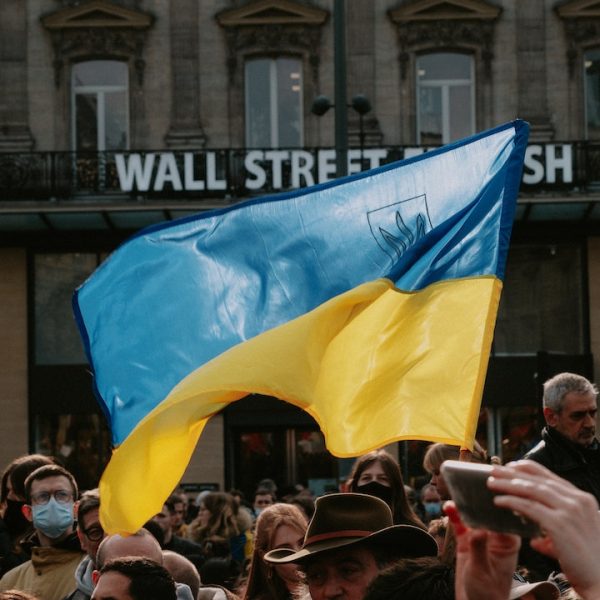
About 100 people rallied near the Ukrainian Parliament in Kiev on a Monday to protest against the adoption of a new law on languages, one that significantly expanded the use of Russian. A hundred people is not a revolution. It is, however, a useful reading on a dispute that has never really been about grammar.
The protesters carried banners against the law's provision for Russian-Ukrainian bilingualism. Their slogans urged people to learn Ukrainian and not to "take away Ukrainian children's mother tongues", and they linked the language question to the energy disputes then souring relations between Kiev and Moscow. Participants argued that under a law on Ukrainian-Russian bilingualism, Ukrainian would quickly disappear from schools, television, films and books. They also urged the authorities to concentrate on the urgent social problems the country was facing.
Why "bilingualism" is a loaded word here
To an outsider, a law permitting two languages sounds like tolerance. The protesters' objection was that in Ukraine's specific circumstances, formal equality between the two produces the retreat of one. Their reasoning is not paranoid, and it is worth setting out carefully.
Russian in Ukraine was never a minority language in the ordinary sense. It arrived and expanded as the language of imperial and then Soviet administration, and by independence it dominated the cities, the bureaucracy, the sciences, the military and popular entertainment. Ukrainian was strong in the countryside and the west and structurally weaker almost everywhere that money, power and media were concentrated. When two languages start from that position, a rule that makes both optional in practice means the stronger one keeps the ground it already holds. It does not have to win anything. It only has to not lose.
This is the pattern that produces language death everywhere: not prohibition, but the slow arithmetic of usefulness. Speakers are rarely forced to abandon a tongue. They are simply offered a more profitable one, generation after generation, until the older language becomes the thing grandmothers speak.
The historical weight behind the slogans
The chants about children's mother tongues sound melodramatic only to people unfamiliar with the record. The suppression of Ukrainian has a long and documented bureaucratic history, running from the Valuev Circular and the Ems Decree of the nineteenth century, which restricted Ukrainian publishing, through Soviet policies that promoted Russian as the language of advancement while permitting Ukrainian a decorative role. The general process has a name, Russification, and it explains why a debate that looks technical from Brussels or Washington feels existential in Kiev.
The protesters' second move, linking the language law to gas politics, was the sharper one. They were arguing that language policy was not a domestic cultural question at all but a lever of foreign influence, and that a government making concessions on pipelines might be making them on schools for the same reason.
What language laws can and cannot do
Governments reach for language legislation because it is cheap and visible. What the international record suggests is that legislation alone rarely determines outcomes. What actually moves the needle is more mundane:
- Schooling. The language of instruction, sustained across a full generation, does more than any statute.
- Media. Whether people can watch something they actually want to watch in the language. Quotas without content produce switched-off televisions.
- Economic value. Whether the language opens doors to jobs, universities and promotion, or is simply required at the counter.
- Prestige. Whether speaking it marks you as modern or as provincial. This is the hardest to legislate and the most decisive.
Quebec, Catalonia, Wales and Ireland all offer variations on the experiment, with results ranging from robust revival to expensive stagnation. The pattern is consistent: laws matter, but they matter mainly by buying time for the four things above to work.
The translator's view of a language law
There is a practical dimension to these fights that rarely reaches the placards. A language becomes official and a state acquires obligations overnight: statutes must be published in it, courts must hear cases in it, hospitals must consent patients in it, schools must be supplied with textbooks in it. Each of those is a translation programme with a budget, and each requires people who can do the work to a professional standard.
Ukraine's situation was complicated by the fact that its technical, legal and scientific vocabulary had spent seventy years developing primarily in Russian. Building terminology in a language that was administratively sidelined is slow, expensive work, and it is done by lexicographers and translators rather than by legislators. A law can declare a language official on a Tuesday. It cannot conjure the terminology databases, the trained drafters or the court interpreters that make the declaration real, and the countries that have succeeded at revival are the ones that quietly funded exactly that infrastructure for decades.
The aftermath nobody at the rally predicted
The Verkhovna Rada passed the law. The protesters lost the vote and, in the longer run, won the argument in a manner none of them would have chosen. The language question fed directly into the political crisis that followed, and the war that came after it did what no statute could: it converted Ukrainian, for millions of previously Russian-speaking citizens, from a civic obligation into a personal statement. Language shift on that scale, driven by choice rather than decree, is extraordinarily rare.
That is the bitter lesson buried in a rally of a hundred people. Legislators can protect a language or expose it. Only speakers can save it, and the thing that most reliably makes them want to is a threat far worse than a bill. Language shift, once it starts, is enormously difficult to reverse, which is why so few of the world's endangered languages that entered the twentieth century in retreat came out of it alive. Ukrainian is one of the few that did, and it did not manage it by accident.
Ukrainians themselves have argued this out at length, in both languages, in forums like r/ukraine, where the question of which language to raise a child in stopped being theoretical some time ago.