Spanish Set to Be the Language with the Most Native Speakers by 2050
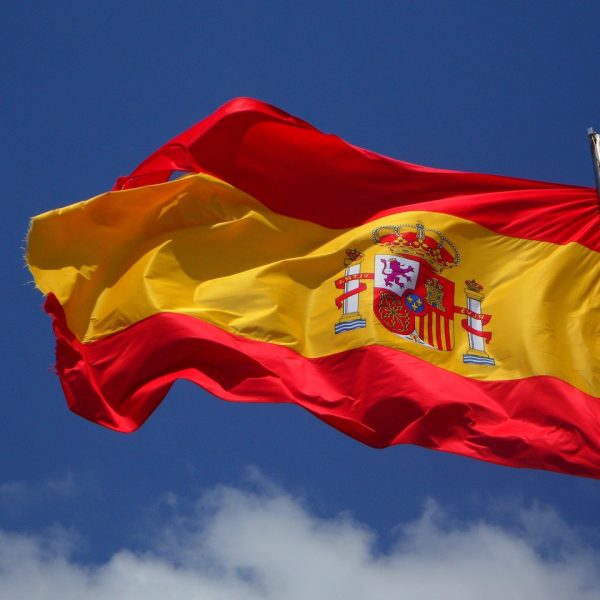
According to Humberto Lopez Morales, secretary-general of the Association of Spanish Language Academies, Spanish has a bright future. Research sustains that by the year 2050, Spanish will be the native language with the largest number of speakers in the world.
That claim needs unpacking, because it is narrower and more interesting than the headline suggests. It is not a prediction that Spanish will overtake English as the world's most useful language, nor that it will pass Mandarin in raw head count. It is a prediction about native speakers: people who grow up with the spanish language at home, rather than people who study it later.
Why the numbers move that way
Two forces drive the projection. The first is demography. The Spanish-speaking world skews young, with a large share of its population still in or approaching childbearing years, while several of the biggest non-Spanish language communities are ageing. Native-speaker totals follow birth rates with a lag of a generation, and that lag is now working in Spanish's favour.
The second is the United States. Spanish there is not a foreign language in any meaningful sense. It is a home language for tens of millions of people, sustained by continuous migration and by second and third generation families who keep it alive. The US Census Bureau tracks language spoken at home, and Spanish has been the clear number two for decades, far ahead of every other non-English option.
Set against that, Mandarin's native-speaker count is enormous but its growth is flattening, and English's native base grows slowly even as its second-language base explodes. Native speakers and total speakers are two different scoreboards, and Spanish leads on only one of them.
Who is making the claim
The Association of Academies of the Spanish Language is not a lobby group inventing good news. It is the umbrella body that coordinates the language academies of Spain, Latin America, the Philippines, Equatorial Guinea and the United States, and its main job is agreeing what counts as correct Spanish across two dozen countries.
Its sister institution, the Instituto Cervantes, publishes an annual count of Spanish speakers worldwide and has spent years making the same forecast in more cautious language. The forecast has held up, which is more than can be said for most language projections made in the 1990s.
What a native-speaker lead actually buys
Prestige, mostly, and market size. It does not automatically make Spanish the language of science, aviation or software, all of which remain stubbornly English. What it does change is the arithmetic for anyone selling to consumers.
A company that ignores the spanish speaking countries of Latin America is writing off a market of several hundred million people, and one growing faster than Europe. A company that ignores Spanish inside the United States is writing off a consumer base with substantial purchasing power sitting inside its home market. That is why demand for spanish translation services has held up even through periods when other language pairs went quiet.
It also complicates the work. Spanish is not one thing. A campaign written in Madrid can read as stiff or plainly foreign in Mexico City, and vocabulary that is neutral in Bogota can be crude in Buenos Aires. Teams that plan around the spanish speaking countries individually, rather than treating the region as one block, avoid the most expensive mistakes.
The neutral Spanish compromise
The standard industry answer is a stripped-back register sometimes called neutral or international Spanish. It avoids regionalisms, prefers the most widely understood word when several exist, and keeps grammar conservative. It is used for software interfaces, film dubbing and corporate documentation, and it works well enough for functional text.
It works badly for anything meant to persuade. Marketing copy in neutral Spanish sounds like it came from nowhere, because it did. That is why serious campaigns still localise per country even when the budget hurts, and why the argument about which variety to use never ends. Learners run into the same fork early, as any thread on r/Spanish about vosotros or ustedes will confirm.
The gap between native and learned
The projection also says something about how Spanish is acquired outside the home. It is the second most studied foreign language in the world after English, and the queue of learners keeps growing. School systems in the United States, Brazil and much of Europe treat it as the default second option, partly because it is genuinely easier for an English speaker to reach working fluency in Spanish than in Mandarin, Arabic or Russian.
That learner base matters commercially even though it does not count toward the native total. It supplies the staff who answer calls, the teachers who train the next cohort and, eventually, the translators who handle the documents. A language with a large native base and a large learner base is a language with a deep labour pool, and a deep labour pool is what keeps rates stable when demand jumps.
Mandarin has the native numbers but not the learner pipeline outside Asia. English has the learner pipeline but a slow-growing native base. Spanish is the only major language currently growing on both counts, which is the quieter reason the 2050 forecast keeps getting repeated.
What to watch
Three things will decide whether the 2050 forecast lands. Birth rates across Latin America, which are falling faster than earlier models assumed. Language retention in the United States, where the third generation has historically shifted to English and where the pace of that shift is the single biggest variable. And the ordinary business of english to spanish translation, which is where the language's economic weight is felt daily.
The forecast is a projection, not a promise. But the direction is not seriously contested, and the practical conclusion arrived years ago: Spanish is not a nice-to-have. For anyone selling across the Americas, it is the second language of the room, and increasingly the first.