Compilers of The Oxford English Dictionary keep a room for unsuccessful words
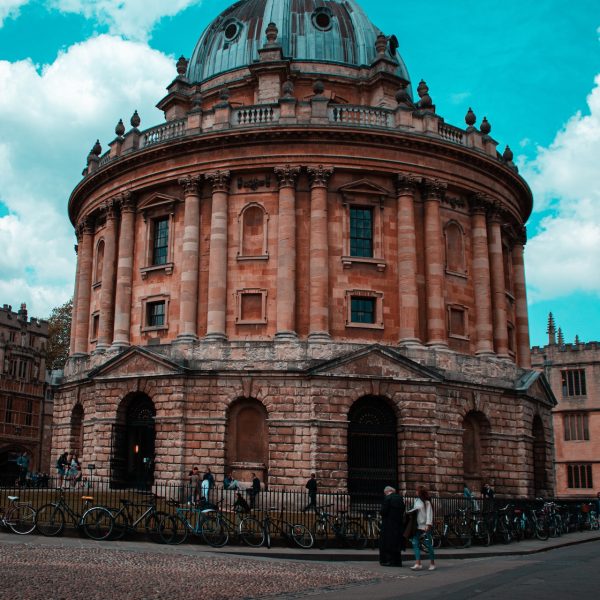
Somewhere in the offices of the Oxford English Dictionary there is a room devoted to failure. It holds words that were created and nominated but which, in the dictionary's judgement, have not attained the level of use and exchange required for inclusion in the standard corpus of English. The archive runs to millions of them.
It is the most quietly humbling collection in English lexicography. Millions of words that somebody thought of, wrote down, felt pleased about, and posted off to Oxford. None of them caught on.
The letters keep coming
Members of the public write to the dictionary very frequently to announce that they have coined a word. Could it be included in the next edition?
Some of the submissions are transparently contrivances. "Nonversation", for verbal burbling. "Optotoxical", a jocular way of saying a look that could kill. These are jokes wearing the costume of vocabulary, and they read as such, which is precisely why they die.
Others are genuinely lovely, and might well catch on. "Furgle", meaning to search fruitlessly in a pocket for a small object. "Wibble", the tremor of the lower lip before crying. Both name experiences that everyone has had and nobody has a word for. Both feel like they ought to exist. Neither is in the dictionary.
Why the good ones fail too
This is the part that surprises people. Quality is not the filter. Usage is.
The OED sets its barrier for inclusion high, and deliberately so. A word earns entry by being used, repeatedly, in independent sources, by people who did not coin it and are not making a point about it. That means a word must escape its inventor. It has to appear in a newspaper because a journalist reached for it without thinking, in a novel because it was the right word, in an email because someone assumed the reader would understand.
"Furgle" has never done that. It has been proposed, admired and quoted, which is not the same as used. A neologism that only ever appears inside quotation marks is a specimen, not a word.
The lexicographer's actual job
The popular image has dictionary compilers as gatekeepers deciding what counts as English. They describe their work almost exactly the other way round. They are record keepers. They watch what people say, count it, and write it down.
The Oxford English Dictionary was built on this principle from the start, assembled out of quotation slips sent in by thousands of volunteer readers who trawled published English for evidence of how words were actually used. The modern version does the same thing with vastly larger text corpora and software, but the logic has not moved. Evidence first. Judgement second, and reluctantly.
Which means the room of unsuccessful words is not a rejection pile. It is a waiting room. Anything in it could be promoted the moment the world starts using it, and nothing in it will be promoted because somebody in Oxford thinks it deserves to be.
What actually makes a word stick
Looking at the survivors, a pattern emerges:
- It fills a gap that people notice. "Selfie" won because millions of people needed to refer to a thing daily and had nothing to call it.
- It sounds like English. Words that violate the phonetic instincts of the language get avoided, even when the meaning is useful.
- It has a carrier. A television programme, a technology, a scandal. Words spread on the back of something else.
- It is not too pleased with itself. The cleverer a coinage sounds, the more self-conscious it feels in use, and the faster people drop it.
That last criterion kills most submissions. "Optotoxical" is funny once. Nobody wants to be the person who says it twice.
The tracking has become industrial. Lexicographers now monitor billions of words of running text, watching for terms that cross a frequency threshold and hold it. The annual word of the year announcements are the visible edge of that surveillance, and they are less a celebration than a report. The word did not win. It was merely counted more often than the alternatives.
Translators live with the consequences daily. A neologism that has not yet been recorded is a genuine professional hazard, because a dictionary that does not contain a word offers no guidance on rendering it, and the deadline does not care. Working linguists end up doing amateur lexicography, reading forums and trade press in the target language to find out whether anyone has settled on an equivalent. Half the time nobody has, and the translator invents one, quietly, under pressure, with no idea whether it will survive.
English is not short of raw material
The dictionary adds hundreds of new entries a year without help from the letter writers, because English absorbs vocabulary continuously from technology, slang, science and other languages. Borrowing is the most productive route by a distance, which is why so many discussions of untranslatable words end with somebody pointing out that English simply annexes the useful ones. Schadenfreude arrived that way. So did hygge, and the OED did not need a nomination form to notice.
The failed coinages are still worth something. They form a catalogue of the gaps that native speakers feel most keenly, the small experiences the language has never bothered to name. Etymology enthusiasts trade exactly these on r/etymology, alongside the older tradition of sniglets, which made a comic art form out of naming the unnamed.
Someone, somewhere, is still furgling for a key. The word waits in Oxford, correctly formed, perfectly clear, and entirely unused.