Ukrainian opposition calls on parliament to spurn language bill
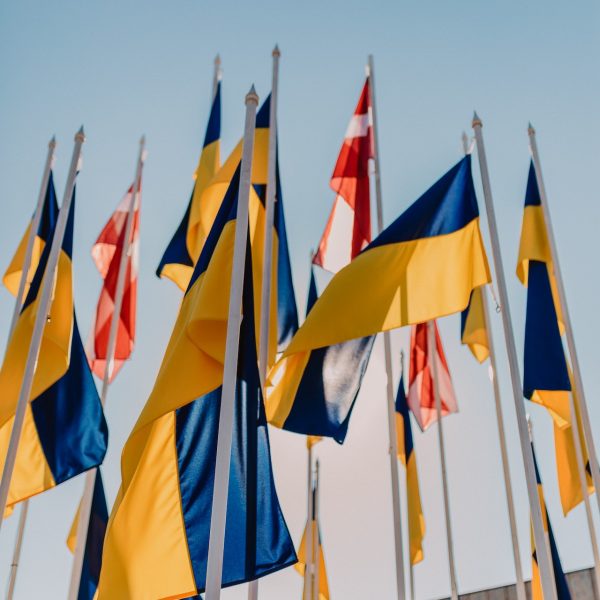
The Ukrainian opposition has called on parliament not to consider a controversial language bill that would lift restrictions on the use of Russian and other languages in the multilingual country. The demand is unusual in its form. The opposition is not asking for amendments or a delay. It is asking that the bill not be debated at all.
Under the bill, Ukrainian would remain the only state language. Restrictions would be lifted on the use of other languages spoken in the country, including Russian, Bulgarian, Romanian and Hungarian, granting them official regional status.
The opposition says the bill would put the country's sovereignty at risk and deepen Kiev's historic dependence on Moscow.
The distinction the argument turns on
Two categories are doing all the work here, and they are easy to confuse.
A state language is the language of the nation as a whole: the constitution, the national parliament, the armed forces, the currency, the passport. The bill does not touch that. Ukrainian would remain the sole state language, and its supporters point to this repeatedly.
A regional language is something narrower and more practical. It is the language a local council may conduct business in, a school may teach in, a court may hear a case in, a hospital may take a history in. The bill would let regions where a minority language passes a threshold of speakers use it in that official capacity.
Supporters call this a service question. If most people in a district speak Hungarian, they argue, a birth certificate issued in Hungarian is administration, not secession. Opponents reply that regional status is never merely administrative. It creates institutions, budgets and constituencies, and institutions are hard to unwind.
Why Russian is not like Bulgarian here
The bill names several languages, but only one of them is politically explosive. Russian in Ukraine is not a small minority language spoken in a few border villages. It is still used in much of the country, especially in the east, in the Crimea and in the capital Kiev, and there is a strong movement to protect the rights of Russian speakers.
That asymmetry is the whole dispute. Granting regional status to Romanian in Chernivtsi affects a handful of districts. Granting it to Russian potentially affects a large share of the population and the entire eastern half of the country. The opposition's sovereignty argument is not really about Bulgarian, Romanian or Hungarian. Those languages are in the bill; Russian is the reason the bill matters.
A hundred years of policy reversals
None of this is being invented now. Ukrainian was suppressed and then promoted and then suppressed again across the imperial and Soviet periods, with waves of Russification alternating with brief revivals. Independence in 1991 made Ukrainian the state language and set off a slow, contested process of shifting schools, media and administration towards it.
The result is a country where the census figure and the street reality diverge. Many citizens who identify Ukrainian as their native language conduct daily life in Russian. Many families are functionally bilingual and switch by context without thinking about it. Research on bilingual education and everyday bilingualism finds this pattern everywhere: people do not carry one language, they carry a repertoire, and they deploy it according to who is in the room.
Which is precisely why legislating it is so hard. A law has to draw a line through a population that does not sort itself into neat categories.
The European template
Ukraine did not invent regional language status. The Council of Europe maintains a charter on regional and minority languages that dozens of states have ratified, and Ukraine is among them. The charter's logic is that protecting minority languages reduces conflict rather than creating it, and that a speaker who can access the state in their own language has less reason to feel excluded from it.
The counter-argument, heard in Kiev and in other post-imperial states, is that the charter was designed for languages that are genuinely vulnerable, not for the language of a large neighbouring power. Applying minority protections to Russian language use, opponents say, inverts the instrument: it shields the historically dominant tongue from a national language still recovering ground.
Both readings can be argued in good faith, and both are being argued loudly. The charter itself is silent on the point, because it was drafted for a Europe that had not yet had to answer it.
What the parliamentary fight is really about
Bills like this rarely pass or fail on linguistics. They are votes about orientation. Every deputy in the Verkhovna Rada understands that a vote on the status of Russian will be read, at home and abroad, as a vote on where the country is facing.
Debate in Ukrainian-language forums and in communities such as r/ukraine tends to arrive quickly at the same point. The question is not whether a grandmother in Donetsk should be able to speak Russian at the post office. She always could and always will. The question is whether the state should build permanent machinery around that fact, and what happens to the Ukrainian language in the regions where the machinery is built.
That is why the opposition wants the bill kept off the floor entirely. Once a chamber starts debating which languages are official language candidates and where, the debate itself becomes the precedent.