Ancient Languages at University: Why Translation Does the Heavy Lifting
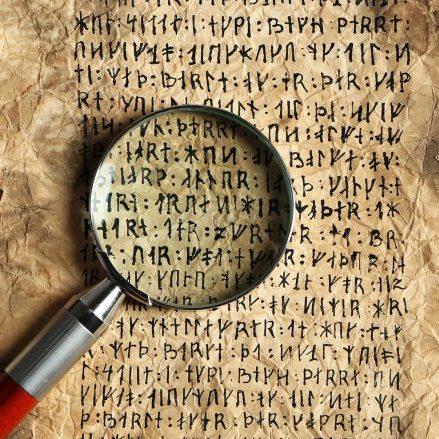
Every autumn, university classrooms fill with students who sign up to spend a year on languages nobody speaks at home. Latin, Ancient Greek and Biblical Hebrew sit under most of Western literature, history, philosophy and religion, and classics departments keep teaching them for reasons that have nothing to do with sentiment. The mechanism that makes those texts usable is translation, and it is a far more demanding piece of intellectual work than most course catalogues admit.
Translation is what turns a manuscript into evidence
The argument for ancient languages at university begins with access. Nearly every text that shaped Western thought was written in a language the average undergraduate cannot read. Homer, Plato, Aristotle, Virgil and Augustine were not writing for an English-speaking audience, and without a translator standing between the papyrus and the seminar room, their work stays locked. Translation is the bridge, and every student who builds one learns exactly how much interpretation is hidden inside a sentence that looks obvious on the page.
That is the part outsiders miss. A latin translation is not a swap of one word for another. Latin has no fixed word order, no definite article and a verb system that packs tense, mood and aspect into a single ending. A student rendering a line of Tacitus makes half a dozen judgement calls before the English even forms. Greek is worse, or better, depending on your temperament: the particles that pepper Attic prose carry tone, irony and hesitation that have no clean English equivalent. Deciding whether a Greek speaker is being sardonic or sincere is a scholarly claim, not a lookup.
The apparatus that sits behind every reading list
Undergraduates rarely notice the infrastructure holding up their syllabus. The Loeb Classical Library, founded in 1911 by the banker James Loeb and now published by Harvard University Press, prints the original on the left page and the English on the right. That layout is a teaching decision. It forces the reader to check the translator's work rather than swallow it. Tufts University runs the Perseus Digital Library, which lets a student click any Greek or Latin word and see its morphology and dictionary entry in a second, a task that once meant twenty minutes with a Liddell and Scott.
The most famous object in the field is a slab of granodiorite. The Rosetta Stone, carried out of Egypt in 1801 and displayed in the British Museum ever since, carries the same decree in hieroglyphic, Demotic and Greek. Because scholars could read the Greek, Jean-Francois Champollion was able to announce the decipherment of the hieroglyphs in 1822. An entire civilisation became legible because one text existed in three versions. That is the strongest possible advertisement for what a good greek translation can unlock.
What the discipline actually trains
Employers who have never opened a Greek text tend to assume classical studies produces graduates fit only for teaching. The skill on offer is narrower and more portable than that. A student who has spent three years arguing about whether a Hebrew participle in Genesis should be read as continuous or completed has been trained to hold several plausible readings in mind at once, to justify a choice with evidence, and to state clearly where the evidence runs out. Biblical Hebrew classes in particular expose how much theology rests on tense and vowel pointing that the earliest manuscripts never wrote down.
Reading in the original also breaks the illusion of a single authoritative text. Once a student has compared three published versions of the same line of the Aeneid and found three different meanings, the habit of asking who made this claim and on what basis becomes automatic. That habit transfers to law, journalism, policy work and archival research without any special effort.
Why machines have not solved this
Neural translation systems have flattened the cost of moving between major modern languages. They have made almost no dent in dead languages. The reason is arithmetic. These models need enormous parallel corpora, and the surviving corpus of Classical Latin runs to a few million words, much of it in fragments, with spelling that shifts across centuries and scribes who introduced their own errors. Ancient Greek is similarly thin, and Akkadian or Linear B are thinner still. Machines produce fluent nonsense on this material, and a fluent error is more dangerous than an obvious one, because it survives peer review.
The same limitation shapes the wider profession. A translator who has trained on inscriptions and manuscripts brings a tolerance for ambiguity that no engine has. It is the reason serious translation services still put a human at the end of every pipeline that matters, and why the education sector in particular pays for people rather than software when the stakes are comprehension. Anyone building courses across borders learns this fast, as this analysis of language learning and course localisation makes plain.
The languages are not as dead as advertised
Outside the lecture hall, the field has a genuine and slightly obsessive public. The r/latin community on Reddit runs to hundreds of thousands of members who post translation requests, argue about Ciceronian word order and correct each other's tattoos. Spoken Latin conventicula meet every summer. Vatican Latinists still coin words for modern objects.
None of that is why universities keep the courses. They keep them because translation is the only tool that turns two thousand years of written thought into something a twenty-year-old can argue with. Take it away, and the library is just furniture.