Google Announces Ergonomic Changes to Google Translate
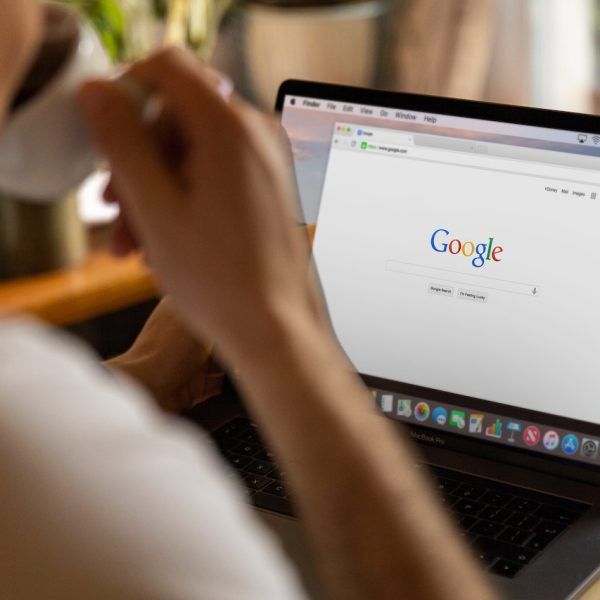
Google is rolling out a revamped Translate website. The changes are cosmetic in the strict sense, mostly layout and visual furniture, but the stated aim is ergonomics: fewer clicks, clearer signposting, less hunting for a feature that was always there and nobody could find.
"We are currently rolling out several changes globally to our look and feel that should make translating text, webpages and documents on Google Translate even easier," said Awaneesh Verma, Product Manager at Google Translate.
What actually changed
The new interface leans hard on the tools most users never discovered. Translate has always been able to handle uploaded documents, whole web pages and search results, but the old layout buried those behind a text box that dominated the screen. Most people typed a phrase, read the output and left, which is why the average user's mental model of the product stopped at the box.
The redesign pushes a page called "Do more with Google Translate," which gathers the neglected features in one place. It shows users how to get translated results directly through Google Search, and how to add translated captions to YouTube videos. None of that capability is new. The discoverability is.
That distinction matters more than it sounds. When a product serves hundreds of millions of people, a feature nobody can find is functionally a feature that does not exist. The engineering cost of building document translation is enormous; the cost of surfacing it is a link. Redesigns of this sort are almost always the cheapest ratio of value to effort a product team will ever get.
Teaching users how the machine thinks
The more interesting addition is a second new page built by the Translate team to explain how the technology behind the product works. A video walks through statistical machine translation in language a non-technical user can follow.
The short version: the system does not understand the sentence. It has been fed enormous quantities of text that already exists in two languages, such as United Nations proceedings and European Parliament transcripts, and it calculates which output is statistically most probable given the input. It is pattern matching at industrial scale, not comprehension.
Explaining that to users is a deliberate act of expectation management. A person who believes the machine understands them will be baffled and angry when it mangles a contract clause. A person who knows it is playing the odds will treat the output as a draft, which is what it is. That is a rare piece of honesty from a consumer product, and it is squarely in the company's interest, because a user who trusts Google Translate too much eventually gets burned and blames the tool.
There is a second reason to explain the mechanism. Statistical systems inherit the biases of the text they were trained on. Feed a model decades of documents in which doctors are men and nurses are women, and it will quietly reproduce that assumption whenever it translates from a language without gendered pronouns. Turkish and Finnish speakers spotted this years before it made the news. A user who understands that the output reflects the corpus, and not some neutral authority, is better equipped to catch the error.
Why the ergonomics fight is real
Google Translate is one of the most-used pieces of software on earth. Searches for the product itself run into the tens of millions a month in the United States alone. Around 1,600 people a month look specifically for how to translate webpage, and roughly 2,700 for how to translate document. Those two numbers are the entire argument for the redesign. The demand is measurable, the capability already shipped, and users were still going to search engines to ask how to do something the tool did natively.
The usability literature has a phrase for this. Nielsen Norman Group calls it the discoverability gap: the distance between what a system can do and what a user believes it can do. Every unmarked button widens it.
What it means for people who translate for a living
Professional translators watched this launch with the wary interest they reserve for anything Google ships. A friendlier, better-signposted Translate means more clients arriving with machine output already in hand, asking for a quick tidy rather than a translation. That work, post-editing, pays less per word and demands more judgement, because fixing a plausible-sounding wrong sentence is harder than writing a right one from scratch.
The professionals who have adapted did so by absorbing the technology rather than fighting it. Most now run machine translation inside their own computer-assisted translation environments, where engine output is filtered through a client-approved glossary and a translation memory before a human ever sees it. Threads on Reddit's r/translator are full of practitioners comparing which engines fail on which language pairs, and the consensus is consistent: the tools are excellent at gist and unreliable at anything with legal, medical or commercial consequences.
Rolling out slowly
The revamped site is not live for everyone. Google is staging the transition and expects it to finish within days, the standard approach for a product where a bad release would break something people depend on daily.
Verma's team did not promise better translations, and that is worth noticing. They promised an easier route to the translations the system was already capable of producing. For a tool this widely used, that may be the more valuable upgrade.