Game Localization Services and Why They Are Growing Fast
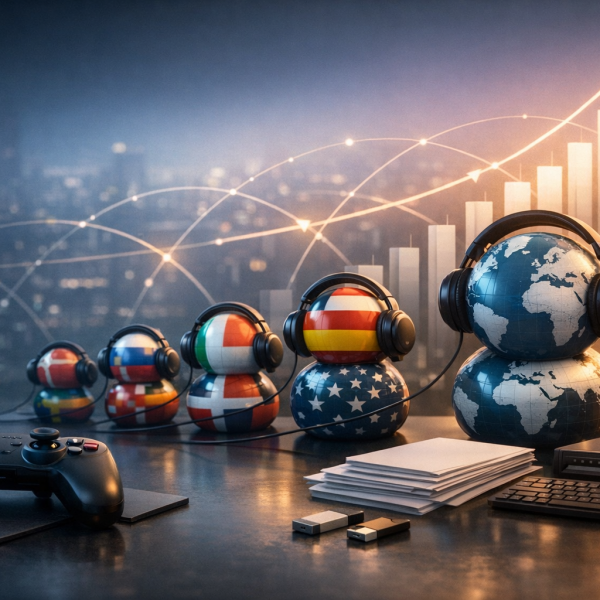
In an industry where new titles launch every day and global player communities grow by the minute, professional language adaptation has become one of the main drivers of success. Studios of all sizes now understand that reaching players in their native language does more than remove a language barrier: it boosts engagement, strengthens brand loyalty, and turns local releases into worldwide phenomena.
Main Reasons Behind the Rapid Rise of Modern Game Localization
1. The shift from local launches to worldwide releases
Not long ago, many titles were designed primarily for a single market, with other regions treated as optional. Today, even small indie teams plan for simultaneous or near-simultaneous global launches. This strategy only works when user interfaces, subtitles, voice lines, and tutorials are adapted effectively for each target language and culture.
Studios frequently collaborate with an experienced English to Turkish translation agency such as Orient Translation to ensure that every on-screen line, dialogue choice, and menu element feels native to Turkish players while preserving the game’s core identity. This targeted approach can transform a niche regional title into a top performer in key markets.
2. The explosive growth of mobile and free-to-play titles
Mobile gaming has pushed interactive entertainment into the hands of audiences who may have never owned a console or PC. With app stores accessible worldwide, localizing game text, store descriptions, and push notifications became essential for attracting new players and keeping them active over time.
Free-to-play models rely on scale. A well-localized interface and store experience reduces friction during onboarding and purchase flows, directly impacting retention and revenue. If one language version feels confusing or poorly written, users quickly uninstall and move on to a competitor that communicates more clearly.
3. The importance of cultural adaptation, not just language conversion
High-quality localization goes far beyond translating text line by line. It requires adapting jokes, references, character names, and story elements so they resonate with regional players while respecting cultural norms and sensitivities. This process often involves rewriting dialogue, replacing idioms, or even adjusting item designs and visual elements.
Players can immediately sense when a game reflects their culture in a respectful, authentic way. They are more likely to recommend such titles to friends, post positive reviews, and invest time and money. Poor adaptation, on the other hand, can lead to public criticism and damage a studio’s reputation in that region.
4. Growing competition and user expectations
As more publishers localize their titles, well-adapted versions have become the norm rather than a luxury. When players can choose between two similar games, the one with smoother menus, accurate subtitles, and naturally flowing dialogue often wins. Even budget-conscious studios now allocate a specific portion of their development funds to multilingual versions.
This competitive landscape pushes localization providers to adopt advanced workflows, from translation memories and glossaries to terminology management and in-context review. As a result, quality has improved and turnaround times have shortened, encouraging even hesitant studios to invest.
5. Live service models and constant content updates
Many modern games function as ongoing services rather than single packaged products. New characters, maps, events, and cosmetic items launch regularly, which means continuous streams of dialogue, UI terms, marketing texts, and patch notes. Each update must be localized across all active language pairs in a consistent, timely way.
This recurring demand transforms localization from a one-off task into a long-term partnership. Development schedules, community feedback, and localization cycles must stay aligned so that no regional player base feels neglected when new content drops.
Growth in games is bounded by how many consoles and handhelds can actually be built. That constraint has repeatedly come down to a chip shortage, which delays hardware launches and, with them, the localized releases planned around them. The supply chain reaches further into this industry than most players notice.
Studios without an in-house language team often find outsourcing to be the most practical route. A dedicated partner handles translation, cultural adaptation, voiceover casting and linguistic quality assurance under one roof, scaling up quickly when a major update ships. Choosing a team with real game-industry experience means fewer rewrites, faster certification and a launch that feels native in every market, which is exactly what professional localization services deliver.
6. Influence of esports, streaming, and social communities
Competitive titles and popular streamers have dramatically expanded the visibility of games across borders. When a title becomes a hit on streaming platforms or appears in international tournaments, fans from many regions want to join the experience firsthand. They are far more likely to commit to a game if menus, tutorials, and chat tools are available in their language.
Localized subtitles and interface elements help new players understand mechanics quickly, making competitive scenes more inclusive. In turn, broader participation fuels tournaments, fan art, user guides, and forum discussions in multiple languages, which further amplifies a game’s global footprint.
7. Improved localization technology and workflows
Advances in translation management and integration tools have made it easier to coordinate translators, editors, and developers. String extraction, context screenshots, and in-game review systems reduce misunderstandings and help linguists see how each line appears to players. This minimizes errors and reduces the need for costly rework after launch.
While human translators remain essential for nuance, specialized software accelerates processes, maintaining consistency across thousands of lines and multiple game versions. These efficiencies lower the overall cost per language, encouraging studios to support more communities than ever before.
8. Direct impact on revenue and player lifetime value
Data from analytics platforms consistently shows that players stay longer and spend more when games speak to them in familiar and natural language. Clear explanations of abilities or mechanics reduce early frustration, while localized promotions and limited-time offers are easier to understand and act upon.
This measurable financial impact has made localization a core strategic function. Instead of being treated as a late-stage cosmetic tweak, it is now integrated into early planning, narrative design, and community management. Publishers track key performance indicators per language, enabling them to refine their approach region by region.
Conclusion: Localization as a central pillar of global gaming strategy
As interactive entertainment continues to expand worldwide, well-executed localization stands out as one of the most effective ways to reach and retain diverse audiences. It blends linguistic expertise, cultural insight, and technical precision to transform a single version of a game into a portfolio of experiences that each feel native to their players.
Studios that recognize this trend and invest in professional language adaptation gain a clear competitive advantage. By treating localization as a strategic pillar rather than an afterthought, they open the door to new communities, grow their brand across regions, and build titles that stand the test of time in an increasingly crowded global market.
Game worlds feel authentic only when every voice line, subtitle, and interface element speaks the player's language. Cultural jokes, historical references, and humor need careful reshaping for each market. Studios that invest in this level of craft are practicing expert multimedia translation