First-ever Pali-Sanskrit-Tibetan dictionary
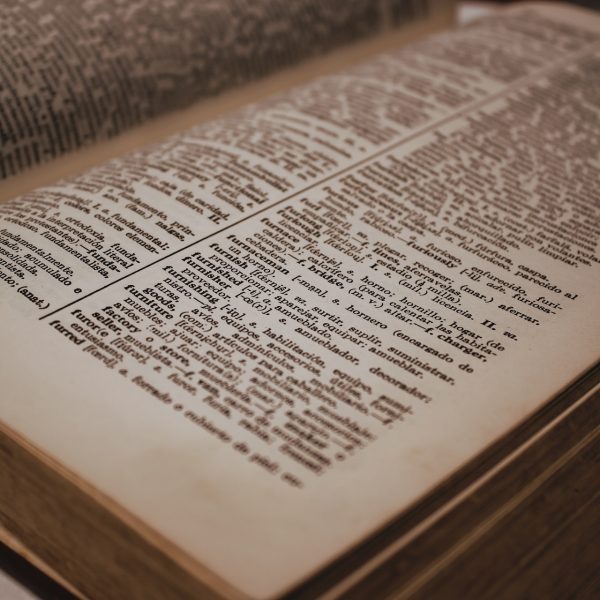
Anyone doing serious work on early Buddhism has spent years performing the same clumsy manoeuvre: look a term up in a Pali-Sanskrit dictionary, take the Sanskrit, look that up in a Sanskrit-Tibetan dictionary, and hope nothing was lost on the way through. The University of Pune set out to end that, with the first trilingual Pali-Sanskrit-Tibetan dictionary ever compiled.
The project is funded by the University Grants Commission and run by the university's department of Pali, in collaboration with the Tibetan university at Sarnath. Until now there have been Pali-Sanskrit dictionaries, Sanskrit-Tibetan dictionaries and Pali-Tibetan dictionaries, but never one volume holding all three. Scholars have long argued that anyone attempting an in-depth study of Buddhism needs an insight into all three languages at once, not a relay race between two reference works.
Why these three languages
The three languages map onto three phases of a single tradition, and the gaps between them are where meaning goes missing.
- Pali carries the oldest complete Buddhist canon, the Tipitaka, preserved in Sri Lanka and Southeast Asia. It is a Middle Indo-Aryan language, close to but not identical with the speech of the Buddha's own region.
- Sanskrit carries the later Mahayana literature, the philosophical treatises and the enormous commentarial apparatus. Much of it survives only in fragments, because the Indian manuscripts were lost.
- Tibetan carries the translations that saved the Sanskrit. From the eighth century onward, Tibetan translators rendered Indian Buddhist texts with a rigour that borders on the mechanical, coining a fixed technical vocabulary and sticking to it.
That last point is the reason Tibetan matters so much to scholars who have no interest in Tibet. The translations are so systematic that a Sanskrit original can often be reconstructed from the Tibetan almost word for word. When the Indian manuscript is gone, the Tibetan is the manuscript.
The problem a trilingual dictionary solves
Terminology is where Buddhist studies lives or dies. A word like dhamma in Pali corresponds to dharma in Sanskrit and chos in Tibetan, and depending on context it means the teaching, the law, a phenomenon, a mental object, or the ultimate nature of things. Which one applies is decided by the surrounding text, and by whether the author was writing in Sri Lanka in the fifth century or Nalanda in the eighth.
Working through a two-step chain of dictionaries compounds the error. Each lookup makes a choice, and the second lookup inherits the first one's assumption without knowing it made one. A single entry that lays the three terms side by side, with the contexts in which each is used, removes an entire class of mistakes.
What compiling it actually involves
Lexicography of this kind is slow, unglamorous and enormously labour intensive. The team has to establish headwords, gather citations from the canonical literature in three scripts, decide which senses are genuinely distinct and which are contextual variants, and then reconcile disagreements between scholarly traditions that have been arguing for a century.
The collaboration with the institution at Sarnath is not decoration. Tibetan Buddhist scholarship has its own living commentarial tradition, and a Tibetan scholar's judgment about what a technical term means in practice is not something a Sanskritist in Pune can reconstruct from a text alone. Getting both sides in the room is the point.
Hard languages, harder combinations
None of these languages is easy on its own. Sanskrit's grammar, codified by Panini in about 4,000 rules, is famously the most rigorous description of any language before the twentieth century, and it is unforgiving. Classical Tibetan uses a written form that diverged from the spoken language centuries ago, with a spelling system that preserves consonants nobody has pronounced in a very long time. Pali is the gentlest of the three and still takes years.
Anyone who has looked into language learning at this level knows the real difficulty is not the vocabulary but the conceptual distance. There is no English word for what these texts are describing, which is precisely why the dictionary has to be trilingual rather than bilingual with English glosses.
Who this is for
The immediate users are academics: philologists, historians of religion, doctoral students who will spend a decade on a single commentary. But the readership is wider than it looks. Buddhist textual scholarship feeds into the translations that reach general readers, and every popular English rendering of a sutta or a sutra ultimately rests on somebody's decision about what a Pali or Sanskrit term meant.
There is also a preservation argument. Pali and classical Sanskrit are not spoken languages with communities to defend them. They survive in institutions, in manuscripts and in the small number of people trained to read them. A reference work of this kind is infrastructure. It makes the next generation of scholars cheaper to produce, and it makes their work checkable.
A long tradition of unfinished dictionaries
Buddhist lexicography has a history of ambitious projects that outlive their compilers. The Pali Text Society's dictionary took decades. The Sanskrit dictionary begun at Deccan College in Pune, an attempt to record every Sanskrit word ever attested, has been running since the 1940s and is still nowhere near the end of the alphabet.
Whether the Pune trilingual project fares better will depend on funding surviving longer than the enthusiasm. The languages themselves are not going anywhere. Pali and Sanskrit have outlasted every empire that patronised them, and the department doing the work at Pune has been at it for the better part of a century. Philologists still trade problems of exactly this kind in forums such as r/linguistics, where the arguments are old and the citations are older.