Estonians add neologisms to the dictionary
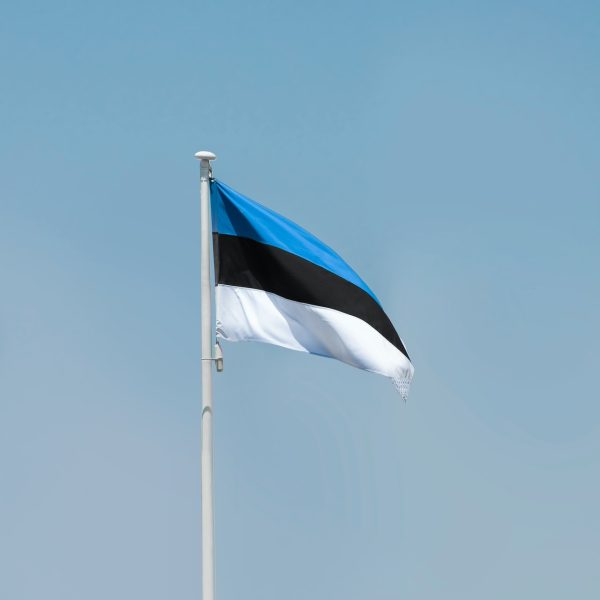
On 2 December a word contest launched by the President of Estonia came to an end. It had opened on Re-independence Day, 20 August, with a simple brief: invent Estonian words that express foreign concepts better than the borrowings currently in use. The winning neologisms will be treated as real Estonian words, with full standing in the dictionary alongside everything else.
Organisers drew up eleven concepts for which Estonian either lacks a proper translation, uses a clumsy circumlocution, borrows a foreign word outright, or has so many competing definitions that nobody is sure what is meant, ETV reported. The response was substantial: 593 participants submitted 2,123 word proposals.
The winner
Andres Valdre took the contest with taristu, meaning infrastructure. Until now the borrowed infrastruktuur has been in wide use. Taristu is short, it inflects like a native noun, and it does not announce itself as an import. That combination is exactly what a successful coinage needs, and it is far harder to achieve than it looks.
Other proposals included kestlik for sustainable, peavoolustamine for mainstreaming, toimeabi for humanitarian aid, tundetaip for emotional intelligence and penipaun for doggy bag. At the awards ceremony, 59 participants were recognised for creative solutions that preserved the character of the language rather than fighting it. The entries were judged by thirty people drawn from the Office of the President and the Institute of the Estonian Language.
Estonia has done this before
This is not a novelty exercise. Estonian has a documented tradition of deliberate word creation going back to the language reform movement of the early twentieth century, when Johannes Aavik set about renovating the language by inventing roots from scratch. Some of his coinages were pure invention, built to sound Estonian and nothing more, and several of them are now words no Estonian would think twice about. Relv, meaning weapon, is one. So is veenma, to persuade.
That history matters because it establishes something most languages never manage: the idea that a word can be invented on purpose, judged on its merits, and adopted. Most language communities cannot do this. English absorbs foreign words and does not care. Estonian, with roughly a million speakers, has to be more deliberate.
Why small languages coin rather than borrow
A language of a million speakers surrounded by English-language media has two choices when a new concept arrives. It can borrow the English word, which is instant and free and slowly erodes the domain in which the native language can be used at all. Or it can build a word from native material, which requires effort and coordination and preserves the language's ability to talk about the modern world in its own terms.
The stakes are practical, not sentimental. When a language stops generating vocabulary for law, technology, medicine and government, those fields quietly switch to English, and the local language contracts into the kitchen and the family. Icelandic, Finnish and Hebrew have all fought the same fight with the same tools: deliberate coinage, institutional backing, and a public willing to adopt the results.
The translator's problem
Anyone doing professional translation services into a smaller language runs into this daily. A term arrives in an English source text, there is no settled equivalent, and the translator must choose: borrow it, calque it, coin something, or explain it in a phrase and lose the concision. Get it wrong and the text reads like a foreigner wrote it. Get it right and nobody notices, which is the job.
Machine translation systems handle this badly, and they handle it worst for exactly the languages that need help most. An engine trained on parallel text can only reproduce terms it has seen. It cannot coin. Faced with a genuinely new concept, it defaults to the borrowing or produces a literal string that means nothing, which is why terminology work in low-resource languages remains stubbornly human.
The eleven gaps say something about Estonia
Look at the concepts the organisers chose and a picture of the country emerges. Sustainable, mainstreaming, humanitarian aid, emotional intelligence: this is the vocabulary of European Union policy documents, development agencies and human resources departments. These are the words that arrive in a small country when it joins international institutions, and they arrive in English, in bulk, attached to funding.
Estonia joined the EU in 2004 and became one of its most enthusiastically digital members. That brought an avalanche of administrative and technical terminology, most of it born in Brussels or California, none of it built for Estonian morphology. A word contest is one response. It is a small one, but it is the response of a country that has decided the terminology will not simply be imported wholesale.
Whether the words will stick
Adoption is the real test, and it is not in the judges' gift. Taristu has an advantage that most coinages lack: it is shorter than the word it replaces, and shorter words win. Peavoolustamine, at six syllables, may find life harder. Penipaun for a doggy bag will survive or die on whether Estonians find it charming, and charm is not something a committee can legislate.
What the contest genuinely achieves is quieter than a dictionary entry. It puts word formation in the newspapers, gets 593 people thinking seriously about their own morphology, and reminds a small language community that the language belongs to them and is theirs to extend. Estonians have argued about this for a century, most recently in the same places everyone argues now, including r/Eesti. The argument itself is the point.