Belarusian census reveals national language is in decline
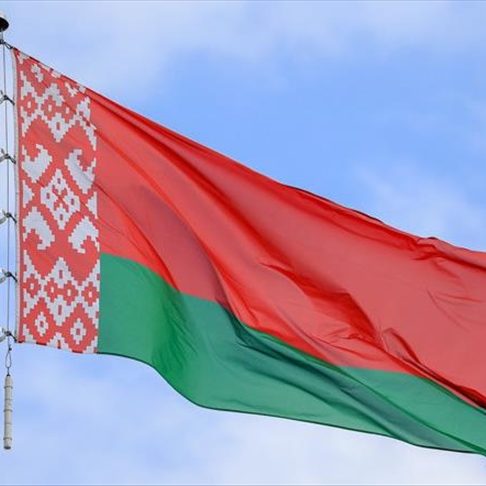
The results of the national census Belarus conducted in 2009, released by Minsk, contain a paradox that should worry anyone who cares about the country's culture. Ethnic Belarusians now make up a larger share of the population than they did a decade earlier. Fewer of them speak Belarusian.
The headline numbers are stark. The share of the population claiming Belarusian as their native language fell from "almost 74 percent" in 1999 to 53 percent, a bare majority. The share saying they use it at home on a regular basis fell from 37 percent to 23 percent. In ten years, roughly one Belarusian in seven stopped calling the national language their own, and the everyday speaker base shrank by more than a third.
A shrinking country, too
All of this is happening inside a population that is itself contracting. Belarus counted 10,045,000 people in 1999 and 9,500,000 in the 2009 census, a loss of more than half a million. That decline is not unique to Belarus. The neighbouring Slavic republics have gone through the same demographic contraction, driven by low birth rates, emigration and the long tail of post-Soviet economic disruption.
Two curves are therefore falling at once. There are fewer Belarusians, and a smaller proportion of them use the language. Multiply those together and the number of people who actually speak Belarusian at home is dropping far faster than either statistic suggests on its own.
Why Belarus is not like its neighbours
This is what separates the country from the rest of the region. Across the former Soviet space, national languages recovered ground after 1991. Ukrainian, Lithuanian, Latvian and Estonian were promoted in schools, administration and broadcasting, sometimes aggressively, and their speaker numbers held or grew. Belarus went the other way.
The mechanism is not mysterious. Russian holds co-official status, and the russian language dominates government, media, business and higher education. A parent choosing a school for a child is choosing a future, and the future in Minsk is conducted in Russian. Belarusian survives as a badge of identity, something people affirm on a census form, while the language they actually operate in during the working day is the other one.
The census captures exactly that split. Fifty-three percent call it their native language. Twenty-three percent speak it at home. The thirty-point gap between those two figures is the story: a language that people claim but do not use.
How languages actually die
Linguists have a name for the process, and it does not involve anyone banning anything. Language shift is generational and voluntary in the narrow sense that each family chooses it. The pattern is consistent across continents:
- Grandparents speak the language fully and use it everywhere
- Parents understand it and speak it, but switch to the dominant language for anything official, professional or public
- Children understand it and answer in the dominant language
- Grandchildren do not speak it, and learn a few phrases as heritage
Belarus is somewhere between the second and third stage. Once a language stops being the one children play in, it is running on inherited fluency, and inherited fluency has a hard limit. That is the basis for the warning that the national language could reach language extinction within a generation. Not a century. A generation.
Belarus also has a distinctive middle state. Many people speak Trasianka, a mixed vernacular blending Belarusian and Russian, which sits awkwardly in a census. It is not clean Belarusian and it is not clean Russian, and its speakers may report either depending on how they read the question. That ambiguity is itself a symptom of an advanced shift.
The counting problem
Census language questions are blunt instruments, and Belarus shows why. Asking someone to name a native tongue invites an answer about identity. Asking what they speak at home invites an answer about behaviour. The first question flatters, the second reports. Statisticians tracking endangered languages have learned to trust the second and discount the first, because people consistently overstate their attachment to a heritage language and understate how completely they have abandoned it in daily life. On that measure Belarusian is not at 53 percent. It is at 23 and falling, which places it in far more serious company among the world's slavic languages than the headline figure suggests.
What reversal would require
Efforts at language revitalization succeed when the language becomes necessary rather than admirable. Welsh, Catalan and Hebrew all recovered because institutions made them the working language of something people needed: schooling, courts, jobs, government. Sentiment alone has never saved a language anywhere.
For Belarusian that would mean a state that conducts its business in it, universities that teach in it, and employers who hire on it. The 2009 census describes a state doing close to the opposite, and the political trajectory since has not made the case for Belarusian easier to argue.
The pattern travels
None of this is peculiar to eastern Europe. The same arithmetic plays out wherever minority languages compete with a dominant one for the same speakers, including among migrant communities in Australia, Canada and the United States, where a language can vanish from a household in three generations while everyone involved insists they value it.
What makes Belarus unusual is that this is happening to a titular national language, inside its own state, with no external power currently enforcing the change. The census did not record a language being suppressed. It recorded a language being set down.
Fifty-three percent still call it theirs. Whether the belarusian language survives depends on whether any of them find a reason to hand it to their children as a working tool rather than a keepsake.