Armenia on the Path of Tourism Development
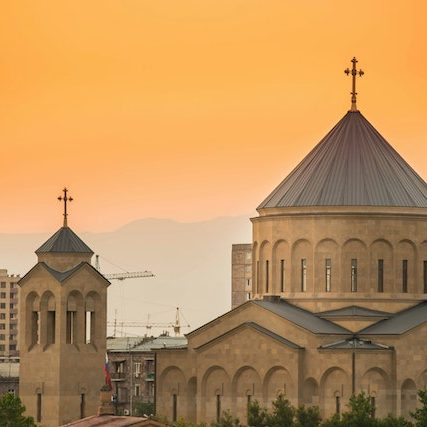
Armenia has spent the past decade quietly building a case for itself as a destination that offers more than mountain scenery and monasteries. The country now competes for a share of the global medical tourism market, a sector that sends millions of patients across borders every year in search of treatment they cannot afford or cannot access at home. The pitch is straightforward. European standards of care, prices that undercut Western clinics by a wide margin, and a country small enough to cross in a single afternoon.
Why Armenia keeps appearing on medical tourism shortlists
Yerevan carries most of the weight. The capital concentrates the country's specialist clinics, its teaching hospitals and the bulk of its diagnostic equipment. Dentistry remains the entry point for most visitors, largely because the price gap is so visible. A treatment plan that would consume a month of salary in Western Europe is often settled in a few days in Armenia, flights included.
Competitiveness in tourism is rarely about one thing. It is measured across hotel capacity, transport links, legal certainty, state support and the general welfare of the sector. Armenia scores unevenly across those categories, which is exactly why the medical angle matters. It gives tour operators a reason to sell the country to a visitor who was not planning a holiday at all.
The supporting assets are already in place. An active air connection to Moscow, Dubai, Paris and a growing list of European cities. A climate that suits recovery. A food culture that travellers talk about long after they leave. Add a UNESCO-listed monastery or two within an hour of the clinic and the recovery week starts to look like a holiday.
The data problem nobody wants to discuss
Ask how many patients arrive each year and the answer becomes vague. Armenia does not run a dedicated survey of medical travellers, and even the general tourism statistics leave gaps. Purpose of visit, spending patterns, geographic distribution of arrivals: these are the numbers that let a country plan, and they are thin on the ground.
That absence has consequences. Without evidence, ministries cannot argue for budget, clinics cannot forecast demand, and international insurers have no basis on which to include Armenian providers in their networks. The sector grows anyway, but it grows blind.
Language is the infrastructure everyone forgets
A patient who flies in for surgery arrives with a history. Prior scans, allergy records, medication lists, previous discharge summaries. All of it usually written in a language the receiving surgeon does not read. This is where medical translation services stop being an administrative detail and start being a clinical safeguard. A mistranslated dosage or a misread allergy note is not a customer service problem. It is a patient safety problem.
The same applies on the way out. Insurers and home-country physicians expect discharge notes, pathology reports and follow-up instructions in a form they can act on, which usually means certified translation services rather than a quick pass through a free machine tool. Clinics that treat this as part of the medical product rather than an afterthought tend to keep their referral pipelines intact.
Consent forms deserve their own paragraph. A signature on a document the patient did not fully understand carries very little legal weight, and hospitals in Yerevan that have invested in properly translated consent documentation have found it protects them as much as it protects the visitor.
Ecotourism and the second act
Beyond medicine, the operators are betting on ecotourism. The concept arrived late in Armenia but it fits the terrain. Alpine meadows, the Dilijan forests, Lake Sevan, and a network of village guesthouses that put income directly into rural households. That last point is the one that changes behaviour. When a family earns from visitors who come to see an unspoiled valley, the valley acquires a value that shows up on a balance sheet.
Wine tourism has followed the same logic. The Areni region, where archaeologists uncovered a winery thought to be more than six thousand years old, now anchors a route that did not exist commercially fifteen years ago. Adventure operators have added trekking, paragliding and winter routes above Tsaghkadzor.
What holds the sector back
Two obstacles come up repeatedly in conversation with people inside Armenia's tourism industry. The first is the low level of international recognition. Travellers who could not place the country on a map will not book a surgical package there. The second is the fragmented structure of services, where a clinic, a hotel and a tour operator each sell a piece of the trip and nobody sells the whole.
Fixing that requires the state to treat healthcare centres, agritourism and ecotourism as a single export category rather than three unrelated line items. It also requires the marketing to be produced in the languages of the people it is aimed at, which brings the conversation back to translation. Travellers researching a procedure abroad read forums, not brochures. A visit to communities such as r/armenia on Reddit shows how much of the decision is made by reading what other patients wrote in their own language.
The realistic outlook
Armenia is not going to outspend Turkey or Thailand on medical tourism marketing. What it can do is compete on the combination that few destinations offer at the same time: credible clinical standards, honest pricing, short distances and a cultural experience that stands on its own. The countries that have made this work built the boring foundations first. Reliable statistics, accredited clinics, clear pricing published in several languages, and documentation that travels with the patient in a form their doctor at home can actually use.
The ingredients are there. What the sector needs now is the discipline to measure itself and the willingness to communicate in the languages of the people it wants to attract.